DNA Health Testing for Shelties: What You Really Need to Know
- April 30, 2025
Why should you care about DNA testing when choosing a Sheltie? Because understanding these genetic health issues can protect your beloved companion from preventable suffering, dangerous medication reactions, and potential vision loss or mobility problems. This guide explains what you should expect from responsible breeders and what these genetic conditions mean for your pet’s health and care.
What Responsible Breeders Should Test For
When searching for a Sheltie puppy, reputable breeders should have conducted the following DNA tests on both parent dogs.
1. MDR1 Drug Sensitivity (Multi-Drug Resistance 1)
What it means for your pet: A mutation affecting how your Sheltie processes medications. It allows certain drugs to cross the blood-brain barrier, causing severe neurotoxicity.
If your dog is affected: Your veterinarian must avoid specific medications including some dewormers (ivermectin), certain anti-diarrheal medications (loperamide), and several chemotherapy drugs. Always inform any new vet about your dog’s MDR1 status.
What to expect from breeders: They should avoid breeding two carriers together to prevent ‘affected’ puppies, or may choose to not breed affected dogs at all.
2. von Willebrand Disease Type III (vWD3)
What it means for your pet: This condition prevents normal blood clotting, similar to hemophilia in humans.
If your dog is affected: Simple injuries, surgeries, or even routine nail trims can cause dangerous bleeding. Your vet should know this condition exists before any procedures.
What to expect from breeders: While rare in Shelties, it is severe. Breeders should verify their lines are clear or test to ensure no affected puppies are produced.
3. Collie Eye Anomaly (CEA)
What it means for your pet: A developmental issue where layers of the eye (choroid) do not form correctly. This can range from mild to severe.
If your dog is affected: In mild cases, your pet may show no symptoms. Severe cases can lead to detached retinas and blindness. Regular eye examinations are advised if affected.
What to expect from breeders: They should know the CEA status of breeding pairs and avoid breeding carriers with severe defects.
4. Progressive Retinal Atrophy (PRA – CNGA1)
What it means for your pet: Two forms affect Shelties: PRA-CNGA1 and PRA-BBS2 (late-onset). Both cause gradual deterioration of retinal cells.
If your dog is affected: First signs typically include night blindness, progressing to complete blindness. No cure exists, but knowing early helps you prepare your home and care for a visually impaired dog.
What to expect from breeders: They should never breed two carriers together.
5. Degenerative Myelopathy (DM)
What it means for your pet: Similar to ALS in humans, this condition causes progressive spinal cord degeneration.
If your dog is affected: If your dog is “At Risk”: Testing positive (2 copies) means the dog is At Risk, but not guaranteed to develop the disease. If symptoms occur, they usually start with rear limb weakness after age 8-10. Though heartbreaking, knowing this risk helps with early management and future care decisions.
What to expect from breeders: Breeders generally try to avoid producing “At Risk” puppies, but because the disease is complex and late-onset, they may prioritize other health factors (like hips/eyes) over eliminating DM entirely..
6. Dermatomyositis (DMS)
What it means for your pet: An immune-mediated skin and muscle disease. Susceptibility is determined by a complex combination of genes (haplotypes) known as the “DMS Risk Assessment.”.
If your dog is High Risk: Your Sheltie may develop skin lesions, coat loss, pain, or muscle problems that could require lifelong care.
What to expect from breeders: Breeders use the DMS risk calculator to pair dogs in a way that produces “Low” or “Moderate” risk puppies, avoiding “High Risk” pairings
What You Can Do As A Sheltie Owner or Buyer
- Request DNA test results for both parent dogs before committing to a puppy.
- Verify the public results by checking www.ofa.org
- Ask questions about why the breeder chose to pair those specific dogs.
- Keep your dog’s genetic information in their medical records and share with your veterinarian.
- Be alert to early signs of conditions your dog might be at risk for, based on parental testing.
Key Points to Remember
- DNA testing isn’t just breeder paperwork – it’s critical information about your pet’s future health.
- A responsible breeder will be transparent about test results and explain their breeding decisions.
- Understanding these genetic conditions helps you make informed decisions about your dog’s healthcare.
- Even if your adult Sheltie hasn’t been tested, knowing about these conditions can help you recognize potential symptoms early.
Understanding DNA Test Results
| Result Term | What It Means For Your Pet | What It Means For Breeders |
|---|---|---|
|
Clear/Normal |
Your dog doesn’t have the mutation and won’t develop the condition |
Can be bred with any other dog (safest choice for pairing with Carriers or Affected) |
|
Carrier |
Your dog won’t develop the condition but carries one copy of the mutation and may still have sensitivities (specifically for MDR1) |
Ideally bred to Clear dogs to prevent affected puppies. |
|
Affected/At Risk |
Your dog has the condition or is at high risk of developing it |
Should not be bred (with rare exceptions under expert guidance) |
Why Some Breeders Question Test Validity
Lab-to-lab variation – Independent TV and university probes have shown wildly different breed-mix outputs—and occasional health-variant discrepancies—between laboratories. CBS NewsHealth News Now
Regulation gap – In most countries canine genetic labs are not held to the clinical-grade (CLIA/ISO 15189) oversight required for human tests. Some rely on small variant-reference sets or questionable quality control.
Single-gene tunnel vision – Over-focusing on one mutation can let equally critical traits (hip conformation, temperament, immune diversity) slide.
False security – A “Clear” result for known variants does not rule out undiscovered ones; occasional PRA or DM cases still surface in fully tested litters.
Cost-benefit concerns – Panels run USD $150–250 per dog. In nations without low-cost options, breeders of small litters feel the economics pinch.
So—Should We Test?
Yes, but intelligently.
Choose accredited labs. Look for ISO/IEC 17025 or university-affiliated facilities; cross-check key results with a second provider when stakes are high.
Confirm positives before breeding decisions. Most reputable labs offer free re-runs on new swabs.
Pair DNA with phenotype data. Annual eye/hip exams and pedigree COI metrics keep the gene pool healthy and diverse.
Bottom line: DNA testing is the best preventive screen we currently have, but like any diagnostic it’s only as strong as the lab quality, the breeder’s interpretive skill, and the vet–owner communication that follows. Treat results as decision aids, not absolute guarantees, and you’ll strike the right middle-ground that benefits both Shelties and the people who care for them.
Need More Information?
Ask your veterinarian about these conditions and whether testing might benefit your current Sheltie if they have no prior accessible results. For prospective owners, use this guide as a reference when interviewing breeders to ensure you’re getting a puppy with the best chance at a healthy life.
Your Sheltie’s health is worth the extra effort to understand these genetic factors!
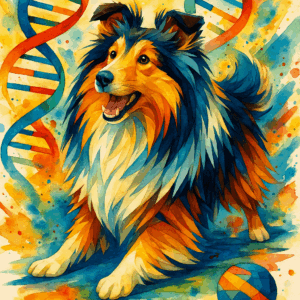
A sheltie is a long-term commitment and should be given the best start in its life to live it to its fullest.